What Is Hard Water—and Why It Matters More Than You Think
If you’re a homeowner in San Jose, there’s a high chance your home is supplied with hard water—water that contains elevated levels of minerals like calcium and magnesium.
At first glance, this doesn’t seem like a big deal. You might notice a few white spots on your dishes or a chalky residue on your faucets. Most people ignore it.
But here’s the truth:
👉 That same residue you see on the outside is building up inside your appliances every single day.
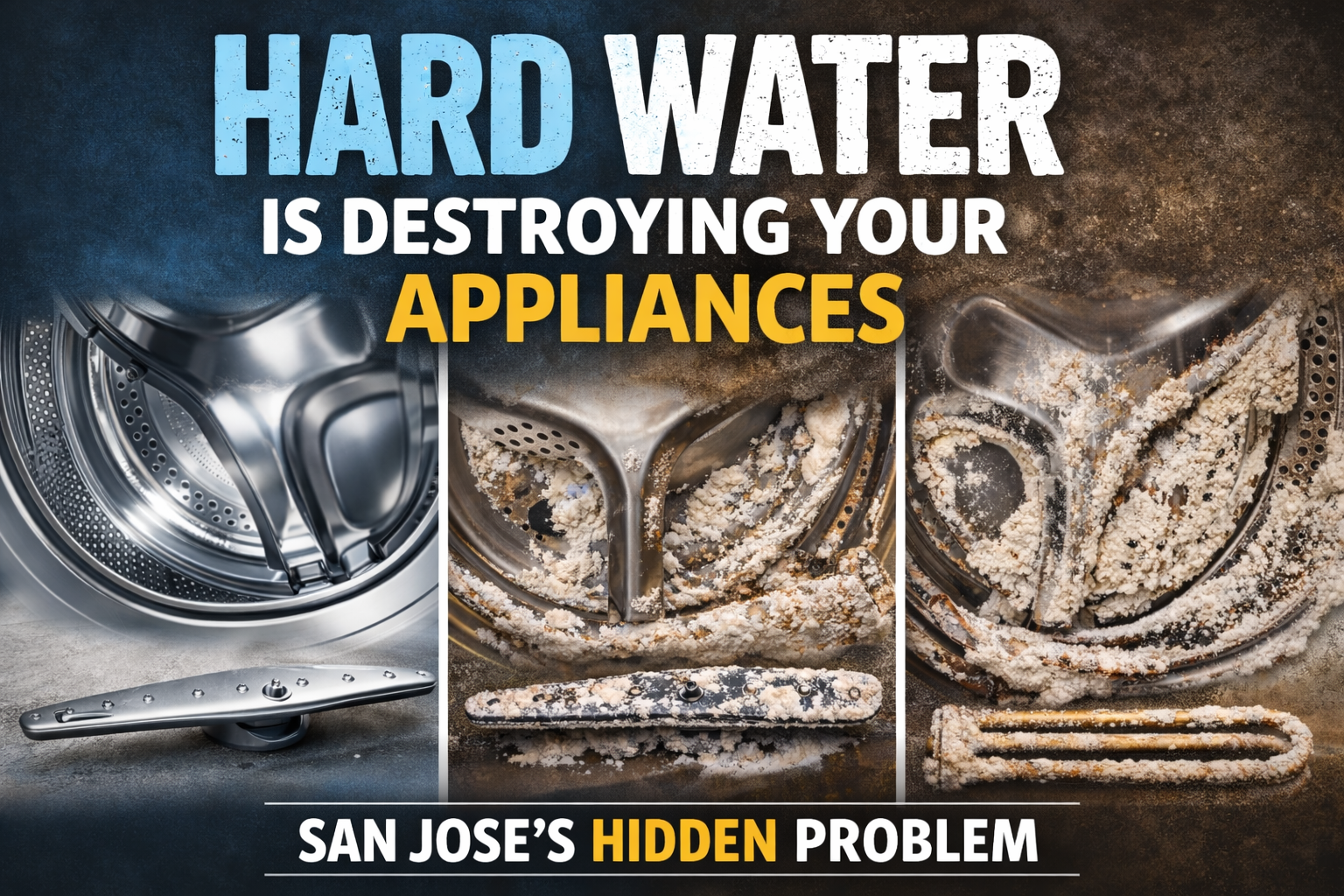
Over time, this mineral buildup—also known as limescale—starts affecting how your appliances function. It reduces efficiency, increases energy consumption, and slowly wears down internal components.
The biggest problem?
It doesn’t happen overnight.
Hard water damage is gradual, silent, and often unnoticed… until your appliance suddenly stops working.
⚠️ The Real Impact of Hard Water (Backed by Data)
Let’s go beyond theory—here’s what actually happens:
- Just 1.6 mm of limescale can increase energy use by 12% or more
- Water heaters can lose up to 48% efficiency in hard water conditions
- Appliance lifespan can drop by 30–50% due to mineral buildup
- Some systems that should last 10+ years may fail in under 2 years without treatment
👉 Translation:
Hard water isn’t just a maintenance issue—it’s a hidden cost multiplying over time.
⚠️ Why Hard Water Is a Bigger Problem in California Homes
California, including San Jose, is known for having moderately to very hard water due to its natural geology.
Water travels through mineral-rich soil and rock before reaching your home, picking up dissolved minerals along the way.
This means that unlike some regions, hard water isn’t an occasional issue—it’s a constant condition.
And because of that, appliances in San Jose homes are:
- More exposed to mineral buildup
- More likely to lose efficiency over time
- More prone to early failure compared to homes with soft water
Many homeowners don’t connect appliance issues to water quality, which is why the problem often goes untreated for years.
What Actually Happens Inside Your Appliances
To understand the real impact, let’s look at what’s happening internally.
Every time you run your dishwasher, washing machine, or water heater:
- Water flows through pipes and components
- Minerals in the water are left behind
- These minerals begin to stick to surfaces
Over time, this leads to layer upon layer of limescale buildup.
Think of it like plaque building up in arteries—it restricts flow and forces the system to work harder.
Inside your appliances, this results in:
- Narrowed pipes and reduced water pressure
- Heating elements covered in insulating mineral layers
- Moving parts experiencing more friction and stress
This is where the real damage begins.
⚙️ How Hard Water Slowly Destroys Your Appliances
1. Heating Becomes Less Efficient (and More Expensive)
One of the most damaging effects of hard water is on heating elements.
Limescale acts as an insulating barrier, meaning heat can’t transfer efficiently to the water. As a result:
- Appliances take longer to heat
- They consume more electricity
- Internal components are exposed to higher stress levels
In real terms, even a thin layer of limescale can increase energy consumption significantly. Over time, this translates into noticeably higher utility bills.
2. Water Flow Gets Restricted
Mineral deposits don’t just sit on surfaces—they also build up inside:
- Pipes
- Valves
- Spray arms
As these pathways narrow, water flow becomes weaker and less consistent.
👉 Real-world example:
A dishwasher may start leaving food residue on dishes—not because it’s broken, but because the spray arms are partially clogged and can’t distribute water properly.
3. Appliances Work Harder Than They Should
When water flow is restricted and heating is inefficient, appliances have to compensate.
They:
- Run longer cycles
- Use more energy
- Put extra strain on motors and internal systems
This constant overwork leads to faster wear and tear.
What should be a 10–15 year lifespan can drop significantly when hard water is involved.
4. Small Issues Turn Into Expensive Repairs
Hard water damage rarely shows up as one big failure.
Instead, it creates a chain reaction:
- A valve gets clogged
- Pressure increases elsewhere
- A component overheats
- Eventually, something fails
By the time you notice a problem, the internal damage is often already advanced.
🏠 Real-Life Scenario: What This Looks Like Over Time
Let’s take a typical San Jose household:
A family installs a new washing machine.
- Year 1–2: Everything works perfectly
- Year 3: Clothes start coming out slightly stiff
- Year 4: Wash cycles take longer
- Year 5: The machine starts making unusual noises
- Year 6: Heating element or internal components fail
When inspected, the issue isn’t just “wear and tear”—it’s years of mineral buildup inside the system.
Now compare that to a home that regularly maintains their appliances or uses a water softener:
- The same machine could last 10+ years with fewer issues
Appliances Most Affected by Hard Water
🧺 Washing Machines
Hard water prevents detergent from dissolving properly, which leads to:
- Stiff or dull clothing
- Residue buildup inside the drum
- Increased strain on internal components
🍽️ Dishwashers
One of the most noticeable impacts:
- White spots on dishes
- Cloudy glassware
- Reduced cleaning performance
Over time, clogged spray arms and internal buildup reduce effectiveness significantly.
🔥 Water Heaters
Water heaters are especially vulnerable because they constantly heat water.
Minerals settle at the bottom of the tank, creating a thick sediment layer that:
- Reduces heating efficiency
- Increases energy consumption
- Raises the risk of overheating and failure
❄️ Refrigerators with Water Dispensers
These systems can experience:
- Slower water flow
- Frequent filter clogging
- Mineral residue in ice and water
🚨 Warning Signs You Shouldn’t Ignore
Hard water damage often starts with subtle signs:
- White or chalky residue on fixtures or dishes
- Appliances taking longer to complete cycles
- Reduced water pressure
- Higher energy bills without a clear reason
- Frequent minor appliance issues
👉 Important insight:
If you’re seeing buildup on the outside, there’s likely much more buildup happening inside.
🛠️ How to Protect Your Appliances (Before It’s Too Late)
✔️ Install a Water Softener
This is the most effective long-term solution. It removes excess minerals before they enter your home’s plumbing system.
✔️ Perform Regular Descaling
Running maintenance cycles helps remove buildup before it becomes severe.
Simple steps like using descaling solutions or vinegar can make a noticeable difference.
✔️ Use the Right Products
Detergents designed for hard water improve cleaning performance and reduce residue.
✔️ Schedule Professional Maintenance
Routine inspections can catch early signs of damage and extend the lifespan of your appliances.
💡 Final Thoughts: A Hidden Problem Worth Addressing
Hard water isn’t something you notice immediately—but its impact adds up over time.
For San Jose homeowners, it’s not a question of if hard water will affect your appliances—it’s when.
Taking action early can help you:
- Avoid costly repairs
- Lower your energy bills
- Extend the life of your appliances
📞 Need Help With Appliance Issues?
If your appliances are already showing signs of reduced performance, hard water could be the reason.
At Agile Appliance Repair, we help San Jose homeowners identify and fix appliance issues before they become major problems.
👉 Contact us today for fast, reliable service—and keep your appliances running at their best.